I. Introduction
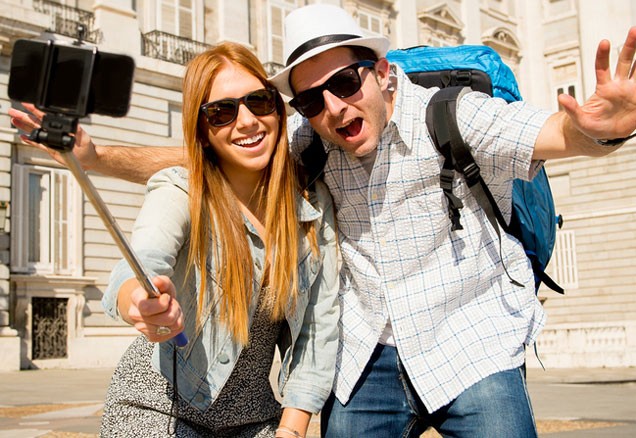
In recent years, selfies have become a popular way to capture memorable moments, share experiences with friends and family, and even create content for social media. One accessory that has made taking selfies easier and more convenient is the selfie stick. But how exactly does a selfie stick work? In this blog post, we will explore the different components of a selfie stick, how it operates, and the benefits of using one.
II. History of Selfie Stick
The origins of the selfie stick can be traced back to the early 2000s when people began taking selfies with digital cameras. However, it wasn't until 2014 when the first selfie stick was patented by a Canadian inventor named Wayne Fromm. Fromm's selfie stick featured a telescoping rod that could extend to take selfies from farther away. He named it the "Quik Pod" and marketed it as a device for photographers to take self-portraits.
The first selfie stick to gain widespread popularity, however, was the Bluetooth-enabled selfie stick. This type of selfie stick allowed users to connect their smartphone to the stick via Bluetooth, making it easy to snap photos from a distance without having to touch their phone. This invention gained global attention in 2014 and became a sensation, with millions of people using it to take selfies and group photos.
III. Parts of a Selfie Stick
To understand how a selfie stick works, it's essential to know its different components. Here are the main parts of a selfie stick:
a. Handle and grip
The handle and grip of a selfie stick is where you hold the device. It usually has a rubberized grip to provide a comfortable and secure hold.
b. Adjustable arm
The adjustable arm is the telescoping rod that allows the selfie stick to extend to different lengths, usually between 20 and 40 inches. The arm can be adjusted by twisting or pulling it to the desired length.
c. Smartphone holder
The smartphone holder is the cradle that holds your phone in place. It usually has adjustable brackets that can accommodate phones of different sizes.
d. Remote control
Some selfie sticks come with a remote control that allows you to take photos from a distance. The remote can be connected to the selfie stick via Bluetooth or a wired connection.
IV. How a Selfie Stick Works
The basic operation of a selfie stick involves extending the telescoping arm to the desired length, attaching your smartphone to the holder, and using the remote control to snap photos. Here's a more detailed look at how it works:
1. Telescopic mechanism
The telescopic mechanism of a selfie stick is what allows it to extend to different lengths. The mechanism is made up of several sections that slide into each other. To extend the arm, you need to twist or pull the sections until you reach the desired length. The sections are locked into place with a locking mechanism to keep them from retracting.
2. Bluetooth connection
Bluetooth-enabled selfie sticks use Bluetooth technology to connect to your smartphone. To connect the devices, you need to turn on Bluetooth on your phone and the selfie stick and pair them. Once paired, the selfie stick can communicate with your phone, allowing you to control the camera remotely.
3. Remote control functionality
The remote control of a selfie stick allows you to take photos without touching your phone. The remote can be a physical button on the handle of the stick or a separate device connected to the stick via Bluetooth. When you press the remote, it sends a signal to your phone to take a photo.
V. Advantages of Using a Selfie Stick
Now that we know how a selfie stick works, let's look at some of the benefits of using one:
1. Wider photo angles
One of the primary advantages of using a selfie stick is that it allows you to capture wider photo angles. With a longer reach, you can take selfies and group photos from a distance, providing a better view of the surroundings.
2. Convenience and portability
Selfie sticks are designed to be portable and easy to use. They are lightweight and compact, making them convenient to carry around. You can easily pack them in your bag or backpack and take them with you on the go.
3. Safety for your phone
Using a selfie stick also provides a level of safety for your phone. Instead of holding your phone out in front of you to take a photo, the selfie stick holds your phone securely in place. This reduces the risk of dropping your phone, especially in crowded areas.
VI. Types of Selfie Sticks
There are several different types of selfie sticks available on the market, each with its own unique features and advantages. Here are some of the most common types:
1. Wired selfie sticks
Wired selfie sticks are the most basic type of selfie stick. They do not require batteries or Bluetooth connectivity and are connected to your phone via a wired connection. To take a photo, you need to press the physical button on the handle of the stick.
2. Bluetooth selfie sticks
Bluetooth selfie sticks are the most popular type of selfie stick. They connect to your phone via Bluetooth and allow you to take photos remotely. Some Bluetooth selfie sticks also come with additional features like tripod legs or LED lights.
3. Tripod selfie sticks
Tripod selfie sticks are a combination of a selfie stick and a tripod. They feature extendable legs that can be adjusted to different heights, providing stability and balance for your phone. Tripod selfie sticks are ideal for taking photos in low-light conditions or when you need to capture a steady shot.
VII. Conclusion
In conclusion, a selfie stick is a simple yet effective device that allows you to take better selfies and group photos. Understanding how a selfie stick works and its different components can help you choose the right type for your needs. With its convenience, portability, and safety features, a selfie stick is an essential accessory for anyone who loves taking photos. Whether you're traveling, attending an event, or just spending time with friends and family, a selfie stick can help you capture and preserve your memories.